
CNC Machining
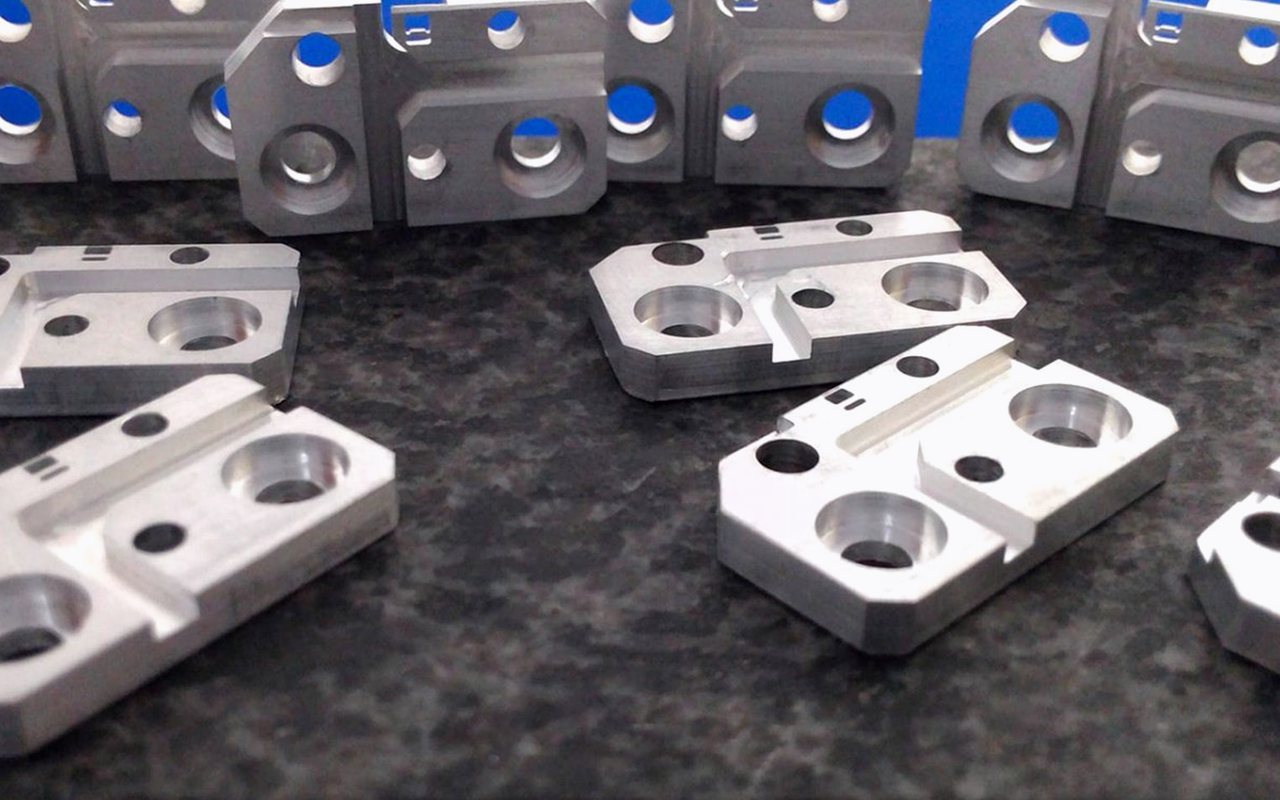
Computer-controlled turning and milling for parts that have to measure exactly what the print says, from a single unit to production runs.
View this serviceA well-built die set shows in the burr on the part and in the life of the punches. We build complete cutting tooling or replace the elements that wear: punches, dies, clamping plates, pillars and bushings. We work tool steels with in-house hardening and tempering, and we grind the plates so the assembly's parallelism does not depend on luck.
We design and build die shoes with guide pillars and bushings, ground upper and lower plates, clamping plate and stripper plate. We set the cutting clearance by material and thickness, and we deliver the assembly tested, not assembled on paper.
The punch is the consumable element of the tooling. We reproduce tool-steel punches and dies from the original, from the print or from the part it produces, with hardening, tempering and grinding. If the tooling has lost its documentation, we rebuild it by reverse engineering.
Before replacing a tool, let us check whether it can be recovered. We resharpen punches and dies, correct clearances, replace guide elements and bring the die back to spec for a fraction of the cost of a new one.
The burr you see on the part is the symptom; the clearance between punch and die is the cause. Too little clearance forces the material to shear in two stages and punishes the punch edge; too much stretches the sheet before breaking it and leaves a dragged edge. We calculate it as a percentage of thickness by material — lower in aluminum and brass, higher in high-strength steel — and we verify it against the real part, not just the drawing. Correcting that clearance usually extends punch life more than upgrading the steel it is made from.
Yes. We tear it down, measure clearances and wear, resharpen what is recoverable and manufacture only the elements that no longer meet spec.
It depends on the steel and the application. We define hardening and tempering by the material being cut and the expected volume, and the written specification ships with the tooling.
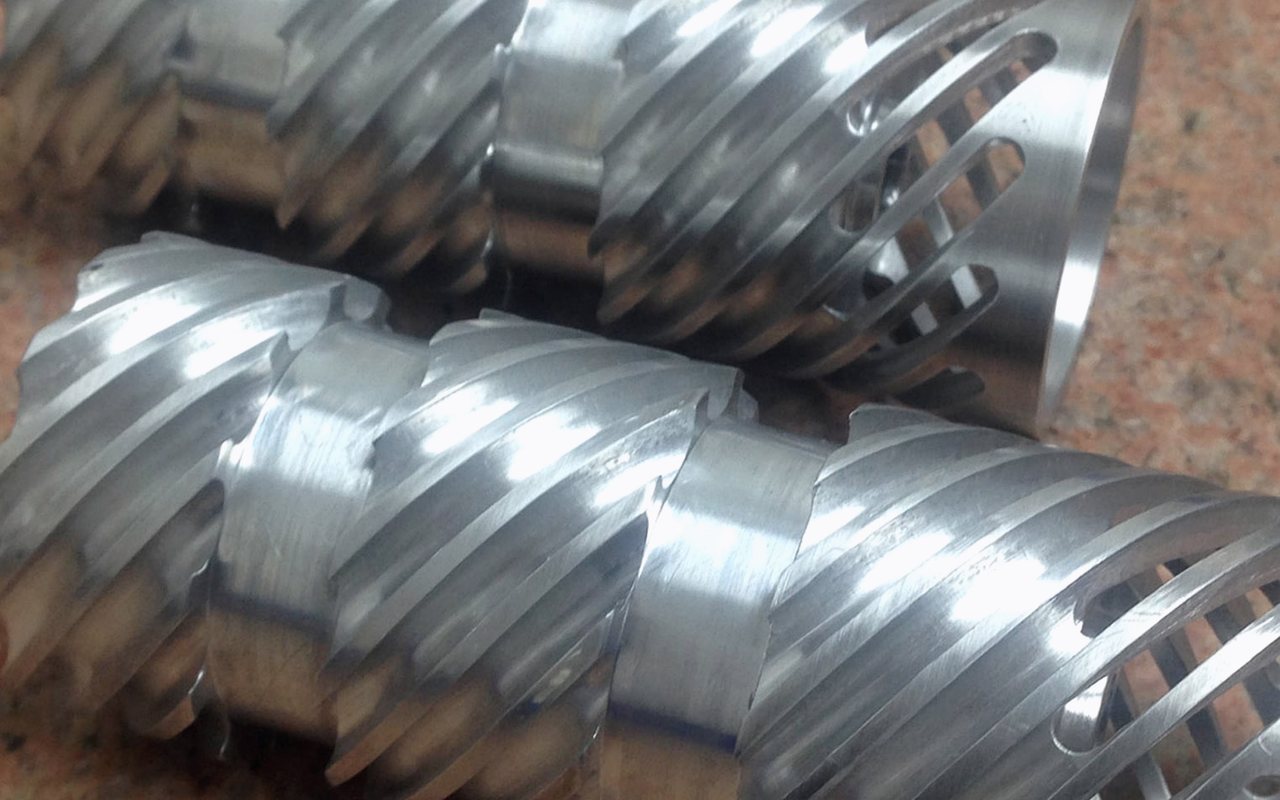
Computer-controlled turning and milling for parts that have to measure exactly what the print says, from a single unit to production runs.
View this service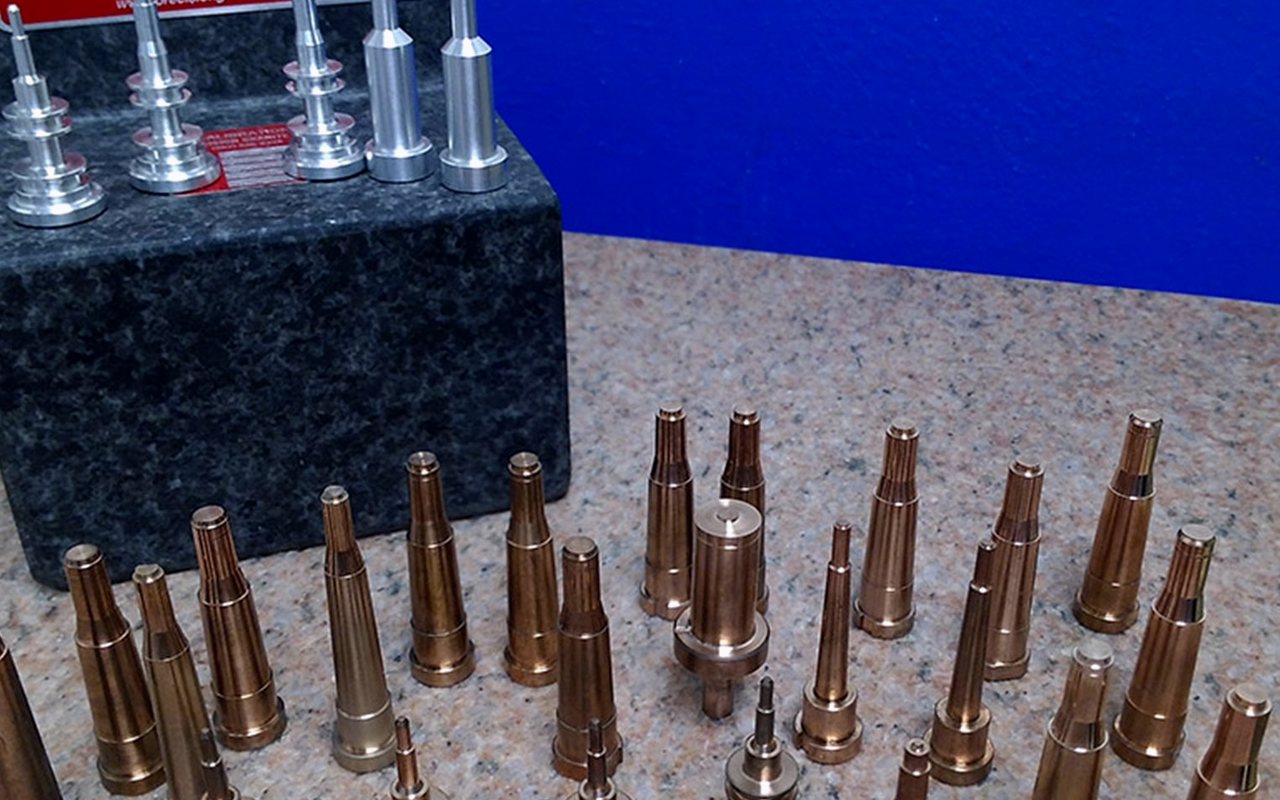
Critical parts where fit, concentricity and finish decide whether the assembly works or the line stops.
View this service
Devices that hold, locate and verify the part so the operator performs the same operation the same way, every time.
View this serviceSend your drawing in PDF, STEP, IGES or DXF and get a technical and commercial proposal in under 24 business hours.